The answer depends on what you measure. The area of land owned, the value of a portfolio of buildings, the number of agricultural hectares: each criterion produces a different ranking. Identifying the world’s largest real estate owner first requires defining what the word “owner” means.
Landowners and real estate owners: two different rankings
The contenders in these rankings fall into two categories that the media often conflate. On one side are owners of vast areas of land, sometimes rural or forested. On the other are investors whose wealth is measured by the value of built assets (offices, retail properties, hotels, homes).
When it comes to land ownership, the number of hectares is what counts. The Roman Catholic Church tops this ranking with more than 70 million hectares, according to data compiled by lovemoney.com—an area larger than all of France. This land includes agricultural plots, as well as sites in some of the most sought-after neighborhoods in London, Paris, and New York.
For built real estate, the relevant measure is portfolio value. Here, Amancio Ortega, the founder of Zara, holds the title of world’s largest real estate owner among private individuals. His holding company, Pontegadea, built its portfolio through the methodical reinvestment of Inditex dividends.
| Ranking criterion | Leader | Approximate scale |
|---|---|---|
| Land area (hectares) | Roman Catholic Church | More than 70 million hectares |
| Private real estate portfolio (value) | Amancio Ortega (Pontegadea) | Diversified across several continents |
| Individual land ownership | Gina Rinehart (Australia) | Approximately 12 million hectares |
| Land ownership in the United States | Red Emmerson (Sierra Pacific Industries) | 2,440,000 acres (approximately 987,000 hectares) |
Amancio Ortega: a real estate empire built on Zara dividends
Ortega’s case illustrates a wealth-building strategy that is rare in its scale. Rather than diversifying his investments into technology or financial markets, the founder of Inditex has channeled most of his dividends into acquiring physical real estate assets.
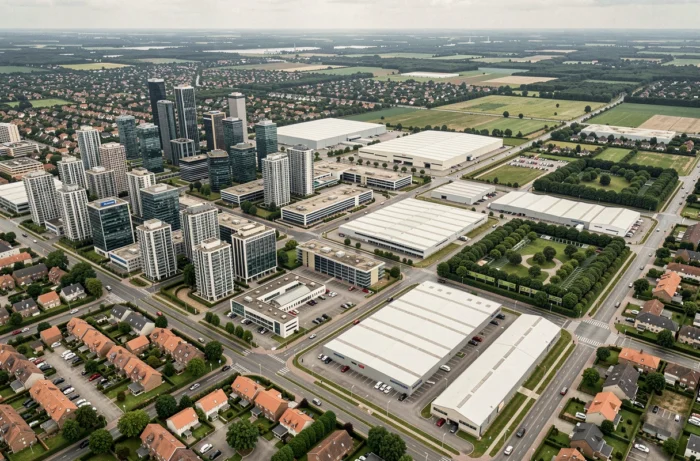
Pontegadea’s portfolio is not limited to retail properties. It includes offices, hotels, residential properties, and logistics platforms. This diversification by asset type, combined with a broad geographic spread, sets Ortega apart from other billionaire real estate investors.
One technical point is worth noting: Pontegadea owns the buildings, not the businesses operating in them. Its hotels, for example, are managed by hotel groups. Ortega is therefore an asset owner, not an operator. This distinction changes the nature of the risk and the portfolio’s profitability.
Pontegadea targets prestigious buildings in global cities, where vacancy rates remain low over the long term. This geographic expansion strategy, particularly in the U.S. market, extends the systematic reinvestment of Inditex dividends.
Agricultural and forest land: landowning giants beyond urban real estate
Rankings based on total land area produce very different results. With its 70 million hectares, the Catholic Church holds a position no one can challenge. But among individual owners, several Australians lead the way.
Gina Rinehart, heiress and head of Hancock Prospecting, owns approximately 12 million hectares in Australia, making her the world’s largest individual landowner. Australian Agricultural Company and Jumbuck Pastoral Company complete the Australian top three, with 7 million and 5.75 million hectares, respectively.
In the United States, the Land Report 100 publishes an annual ranking of the country’s largest landowners. In 2025, the top three are:
- Red Emmerson and his family, with 2,440,000 acres in California, Oregon, and Washington through Sierra Pacific Industries (forest products)
- John Malone, with 2,200,000 acres spread across several states
- Ted Turner, founder of CNN, with 2 million acres across the Southeast, the Great Plains, and the American West
Bill Gates, often mentioned in the media, owned more than 260,000 acres of farmland in 2020—a figure that puts him well behind the top three.

Landowners in France: a fragmented landscape of government, the Church, and holding companies
France offers an interesting example of how land ownership is distributed. Of the country’s approximately 55 million hectares, the state and local authorities own around 16 million hectares, or 29% of the country. Private agricultural and forestry holdings account for the largest share, at approximately 27 million hectares.
The Catholic Church owns around 2 million hectares in France, or 4% of the country. Companies and landholding companies control approximately 7 million hectares. The remainder is divided among families, cooperatives, and various investors.
- State and local authorities: approximately 16 million hectares (29%)
- Private agricultural and forestry holdings: approximately 27 million hectares (49%)
- Companies and holding companies: approximately 7 million hectares (13%)
- Church and religious institutions: approximately 2 million hectares (4%)
In Paris, the city owns approximately 11.7% of the city’s land, primarily through social housing, public facilities, and green spaces.
What the choice of measurement reveals
The answer to the question “who is the world’s largest real estate owner?” depends entirely on the criteria used. By land area, the Roman Catholic Church has no rival. By the value of built real estate assets, Amancio Ortega tops the private-sector ranking, thanks to an investment discipline unmatched among billionaires.
Major Australian and American landowners operate in a different arena: agricultural, forest, and grazing land, where the value per hectare remains far below that of an office tower in Chicago or a building in London’s Mayfair district. Land area tells you nothing about value, and value tells you nothing about land area: two metrics, two very different kinds of wealth.