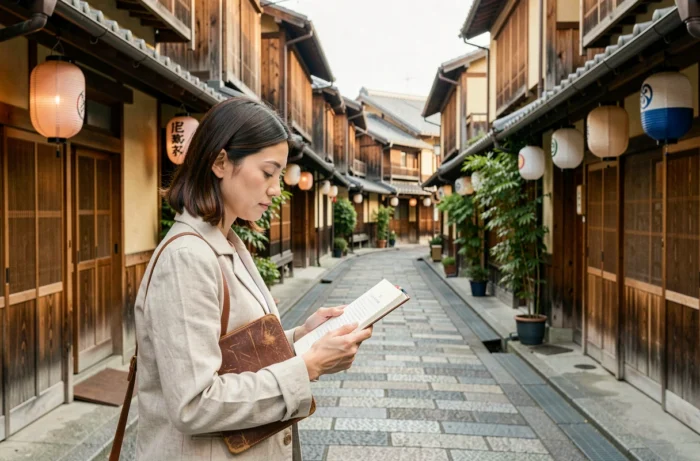
Planning a first trip to Japan means getting to grips with a few administrative and tax procedures that work differently from those in Europe. Since 2026, Japan’s tax-free shopping system has changed: travelers now receive a refund on their purchases after departure, rather than in store at the time of purchase. This change affects how you plan your shopping, your time at the airport, and even the order in which you check your bags.
Tax-free shopping in Japan and customs formalities before your return flight
The new tax-free system requires you to keep your purchases accessible when you go through customs. Officers may ask to inspect the items before you board.
At Naha Airport, for example, the instructions specify that you must complete customs formalities before checking in your hold luggage. Packing a tax-free purchase in a checked suitcase too early could mean losing your refund.
This requirement has a practical impact on your plans for the final day: allow extra time at the airport and arrange your bags so you can quickly show the items. Many travelers only discover this requirement at the check-in counter, when it is too late to reorganize their belongings.
Planning a trip around Japan also means anticipating logistical details like this, just as you would plan a cultural stop. The same careful approach applies to other destinations, too: the Cinque Terre Unpacked guide follows the same step-by-step approach to practical checks in a completely different country.
Accommodation tax in Japan: rates vary by city
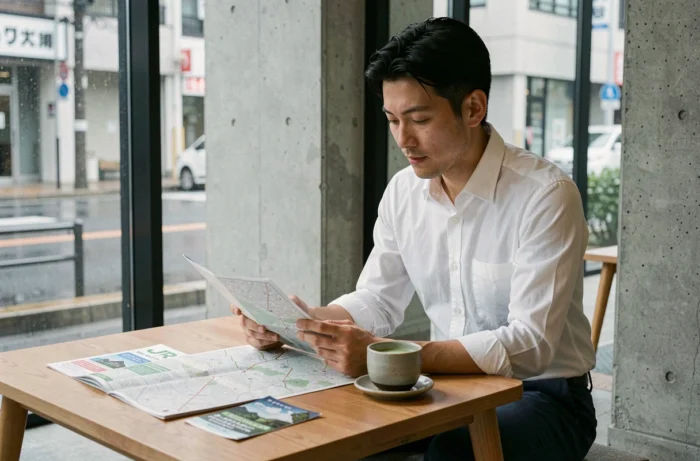
One expense that is often underestimated on a first trip to Japan is the local accommodation tax. It ranges from 200 to 10,000 yen per person per night, depending on the room rate and the local authority.
Rules vary from city to city. Tokyo, Kyoto, and Osaka each have their own rates. Higher-end accommodation can fall into considerably higher tax brackets than standard establishments.
The most common pitfall involves prepaid online bookings. Some platforms include the tax in the displayed total, while others do not. Your accommodation may collect the tax on arrival, even if you have paid in full online. Being faced with an unexpected extra charge in cash at reception, with no ATM nearby, can make for a stressful end to the day.
For a reliable itinerary, it is therefore worth checking the tax city by city rather than assuming the same rules apply nationwide. Each stop on your route deserves its own line in your accommodation budget.
Planning a realistic itinerary for your first trip to Japan
The classic temptation is to try to cover Tokyo, Kyoto, Osaka, Hiroshima, and Mount Fuji in two weeks. This pace turns the trip into a logistical race and undermines the benefits of careful planning.
For a first trip, it is better to focus on two or three cities connected by rail. The Japan Rail Pass remains the main option for long-distance travel, but whether it is worthwhile depends on how many journeys you plan to take. For a trip limited to Tokyo and its surrounding area, it may not always be cost-effective.
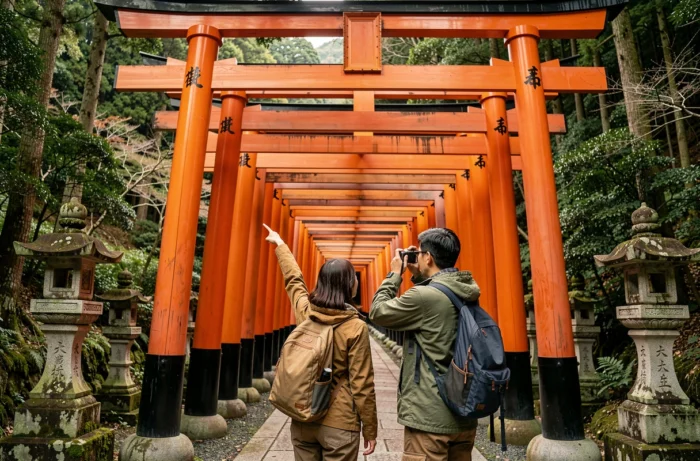
A few principles can help you build a balanced itinerary:
- Alternate a full day of sightseeing (temples, museums, neighborhoods) with a free half-day to allow for unexpected delays, fatigue, or a spontaneous discovery.
- Travel between cities in the morning so you arrive in the early afternoon and can enjoy the rest of the day at your destination.
- Plan to spend at least two consecutive nights in each city to avoid packing and unpacking every day.
- Keep the final day in your departure city free of sightseeing, and set it aside exclusively for practical arrangements (tax-free shopping, reorganizing your luggage, and getting to the airport).
This last point ties directly into tax-free shopping: your last day in Japan is not a sightseeing day; it is a logistics day.
Pre-departure and airport checklist
A first trip to Japan can bring a growing list of administrative tasks, especially toward the end of your stay. Splitting your checks into two stages (the night before departure and then at the airport) reduces the risk of forgetting something.
The night before your return flight
- Gather all receipts for tax-free purchases in an easily accessible pouch, outside your checked luggage.
- Make sure the items covered by the tax-free scheme are available for inspection (not packed at the bottom of a suitcase).
- Check your accommodation bill to confirm that the local tax has been paid and avoid a last-minute dispute.
- Make sure you have enough yen for transport to the airport and any last-minute purchases in the departure area.
At the airport
The order of operations matters. Go to the customs counter before checking in your hold luggage to ensure your tax-free items are available for inspection. After customs, you can pack the items in your checked luggage or keep them in your carry-on, depending on what they are.
This sequence often feels counterintuitive to travelers used to European airports, where bags are routinely checked in before passengers enter the security area. In Japan, reversing these two steps could cost you the tax refund on all your purchases during the trip.
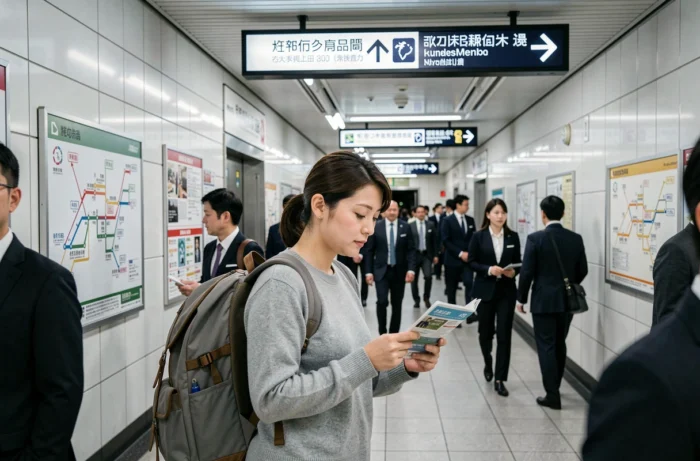
Japan travel budget: expenses guidebooks often overlook
Standard expenses (flights, accommodation, Japan Rail Pass) are covered everywhere. Two budget items deserve particular attention on a first trip.
The first is foreign currency withdrawal and payment fees. ATMs that accept foreign cards are mainly found in konbini (convenience stores such as 7-Eleven and Lawson), but conversion fees vary by card issuer. It is still worth setting aside some yen in cash, especially for temples, small restaurants, and covered markets that do not accept cards.
The second often-overlooked expense is the variable accommodation tax mentioned above. On a ten-night itinerary spread across several cities, the cumulative difference between a tax of 200 yen and one of 1,000 yen per night can have a noticeable impact on your final budget.
A complete itinerary accounts for both of these expenses during the planning stage, rather than waiting until you get home to review your bank statement. Planning a first trip to Japan is about more than the major cultural highlights: those less obvious expenses can add up and affect the true cost of your stay.