White non-woven wallpaper is about more than just its color. Choosing between a linen-effect texture and a smooth finish affects how light is diffused, how easy the wallpaper is to maintain, and how well it holds up over time. Comparing these two finishes using manufacturers’ specifications rather than relying solely on how they look in store helps avoid disappointment once the wallpaper is up.
Raking light and white wallpaper: what natural light reveals
Raking light, common in the late afternoon or in west-facing rooms, exposes every flaw. On a smooth finish, even the slightest mismatch at a seam or imperfection in the wall preparation is visible. The surface reflects light evenly, highlighting dips, bumps, and poorly aligned seams.
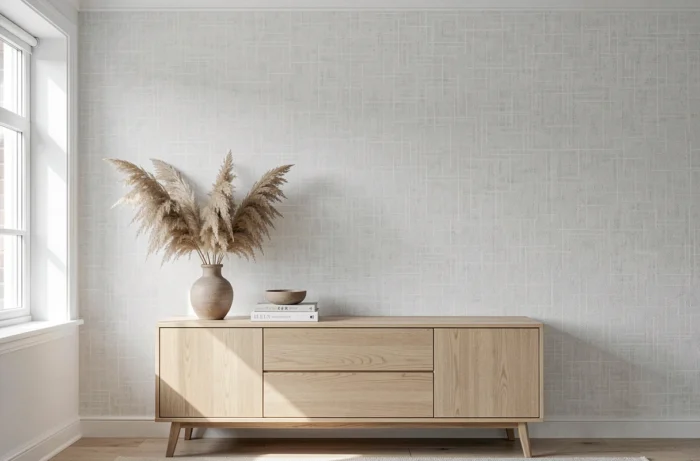
A linen-effect texture diffuses light and softens surface imperfections. Its micro-texture breaks up direct reflections and creates visual movement, making flaws less noticeable. We recommend this finish in any room exposed to strong side lighting, such as a living room with large windows or a hallway lit by a window at the far end.
Please note: a textured finish can make minor irregularities less noticeable, but it will not fix cracks, major bumps, or a crumbling or damp surface. Wall preparation is the same regardless of the finish you choose. Texture is no substitute for a skim coat.
Choosing white linen-effect wallpaper for a poorly prepared wall is like covering up a structural problem. The result will always be better with a sound, sanded, dust-free wall.
Maintaining white non-woven wallpaper: smooth versus linen-effect after cleaning
Manufacturers’ performance claims are worth reading carefully. Smooth white non-woven wallpaper can generally be cleaned with a damp sponge, making it quick and easy to wipe down. Fingerprints and light splashes come off without much effort.
A linen-effect finish traps more fine dirt in its grooves. Its texture can hold dust, greasy marks, and fine splashes. A quick wipe with a sponge may not be enough: you may need to rub gently in a circular motion, checking the manufacturer’s instructions first for guidance on pressure and approved cleaning products.
In the kitchen, ease of cleaning depends on the finish and the manufacturer’s instructions. A smooth surface may be easier to wipe than a textured one, but that alone does not make wallpaper suitable for grease or water splashes. Areas behind the sink or cooktop need appropriate protection, often a backsplash, regardless of the type of non-woven wallpaper used.
What labels don’t always tell you
The term “washable” can mean different things from one manufacturer to another. Some use it to describe a light wipe with a damp sponge, while others mean more vigorous scrubbing. Check the standardized symbol on the product information sheet:
- One wave: wipe with a damp sponge without rubbing; suitable for occasional cleaning in a bedroom or living room
- Two waves: washable with a sponge and mild detergent; suitable for a hallway or entryway
- Three waves: scrubbable and suitable for regular cleaning in high-traffic areas
Smooth white non-woven wallpaper with a three-wave rating is better suited to high-traffic rooms than a linen-effect finish rated with just one wave, even if the latter does a better job of concealing visual imperfections.
White bedroom wallpaper: indoor emissions and choosing the adhesive
In a bedroom, visual comfort is just one consideration. France requires products to carry an indoor air emissions label, with ratings ranging from A+ (very low emissions) to C. An A+ rating for wallpaper is no guarantee if the adhesive itself releases volatile compounds.
The wallpaper rating alone does not tell you about emissions from the adhesive. Check the emissions rating of each component separately, then follow the ventilation and drying instructions. For a child’s bedroom, choose A+ non-woven wallpaper with A+ adhesive, and ventilate the room thoroughly after installation.
The linen-effect or smooth finish does not directly affect emissions. The deciding factor is the composition of the backing and surface treatment, not the texture.
White non-woven wallpaper in damp rooms: bathrooms and laundry rooms
“Non-woven” does not automatically mean “suitable for damp rooms.” Manufacturers distinguish between areas that are simply humid (a wall away from the shower) and surfaces exposed to direct splashes. Even with good ventilation, avoid direct contact with water and check the product-specific instructions.
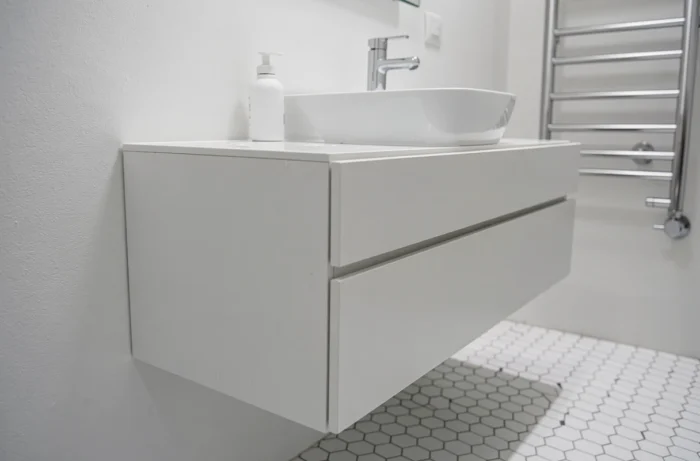
In a bathroom, smooth white non-woven wallpaper offers a practical advantage: condensation is easier to wipe off a flat surface. A linen-effect finish, with its micro-texture, retains residual moisture for longer, which can eventually encourage mold growth if ventilation is inadequate.
- Wall opposite the shower in a well-ventilated bathroom: choose either linen-effect or smooth, depending on the look you want
- Wall next to the shower or bathtub: smooth is preferable; check the product information sheet for water resistance
- Laundry room with a tumble dryer: smooth is recommended, as recurring ambient humidity puts more strain on the wall covering
- Separate toilet: either finish is suitable, as humidity levels remain moderate
Living room, hallway, entryway: choosing white non-woven wallpaper for how the space is used
Living rooms can accommodate either finish without significant technical constraints. Linen-effect wallpaper adds visual depth and a warm, textile-like look. Smooth wallpaper creates a clean, contemporary finish that showcases furniture and artwork.
Hallways and entryways present a different challenge: friction. Coats, bags, and handrails put the wall at shoulder height under strain. Smooth non-woven wallpaper stands up better to repeated rubbing than a textured finish, whose surface fibers can wear down and pill over time.
In a narrow entryway, smooth white wallpaper makes the space look larger by reflecting more light. Linen-effect wallpaper absorbs some of that light and can make the walls feel closer in an already confined passage.
Room-by-room summary
| Room | Recommended finish | Main reason |
|---|---|---|
| Living room | Linen-effect or smooth | Aesthetic choice, few constraints |
| Bedroom | Linen-effect | Soft light, textile-like feel |
| Kitchen (excluding backsplash area) | Smooth | Easier to clean |
| Bathroom | Smooth | Moisture resistance |
| Hallway, entryway | Smooth | Resistance to rubbing |
The choice between a linen-effect and smooth finish comes down to three practical factors: how much light reaches the wall, how often you expect to clean it, and how much foot traffic the area gets. The textile look of linen-effect wallpaper is appealing in quiet rooms with well-prepared walls. Smooth wallpaper is the better choice wherever durability and easy maintenance matter most.