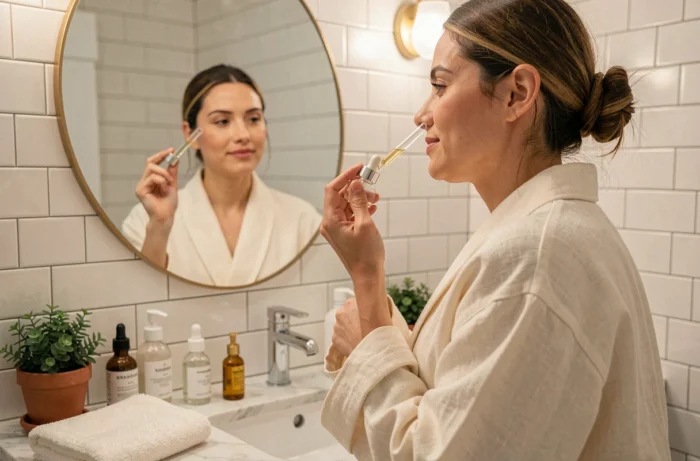
Beauty and wellness routines are no longer limited to a cleanser and moisturizer. At-home beauty devices—LED masks, hair stylers and anti-aging tools—have become part of consumers’ daily lives alongside cosmetic formulas, and market data confirms clear growth in this segment. Putting together a well-rounded selection means considering both the formulation of skincare products and the real value of tech accessories.
Skincare formulations and application order: what determines how well facial products work
A serum applied after a rich cream won’t penetrate the skin. The basic rule is to layer products from thinnest to thickest: watery lotion, serum, eye cream, moisturizer, then sunscreen in the morning. This order isn’t just cosmetic—it’s based on physical and chemical principles.
Water-soluble ingredients such as niacinamide and hyaluronic acid are formulated in a lightweight water-based phase. Applying them to skin that’s still slightly damp after cleansing increases their bioavailability in the skin. By contrast, oil-soluble ingredients such as retinol and tocopherol need a richer carrier and should be applied after water-based serums.
Two common mistakes can undermine this routine. The first is layering a vitamin C serum with a niacinamide product without waiting between applications, which can cause redness in reactive skin. The second is applying too little SPF because the previous product leaves the skin feeling sticky. The order of application and the time you wait between layers matter just as much as your choice of active ingredients.
To explore product ranges that follow these formulation principles, Belle et Naturelle’s shopping selections bring together facial and body care products organized by need.

At-home beauty devices: how to tell useful beauty tech from a gimmick
An article published by LSA in October 2026, drawing on Gifam/NielsenIQ and GfK data, confirms that beauty device sales are growing, driven by younger consumers. LED masks, sonic cleansing brushes and hair stylers: the range has expanded.
Not all these devices are equally effective. We recommend checking three things before buying:
- Wavelength for LED masks: each color corresponds to a range of wavelengths and a different effect on the skin. A mask that doesn’t specify its wavelengths offers no guarantee of targeted results.
- Vibration frequency for cleansing brushes: an effective sonic brush oscillates several hundred times per second. Below that, its mechanical action is closer to a simple massage, with little real benefit for pore cleansing.
- Temperature control for hair stylers: a device without precise temperature regulation can cause irreversible damage to the hair fiber, especially on fine or color-treated hair.
The Appinio study cited by LSA in October 2026 shows that younger consumers keep up with skincare launches and use several products at once. Their routines aren’t minimalist, but they can still be considered: a properly calibrated LED device can replace several targeted serums for blemish-prone skin.
Natural claims and packaging: look beyond the marketing
The word “natural” on cosmetic packaging doesn’t guarantee anything on its own. French law already regulates certain vague environmental claims, and the term “recycled” requires brands to state the actual proportion of recycled material used. A product labeled “eco-friendly packaging” without a specific percentage fails to meet regulatory requirements.
When it comes to formulation, checking the INCI list is still the only reliable way to find out what a product actually contains. Labels such as Cosmos Organic, Ecocert and Nature & Progrès provide an additional framework through publicly available standards, but their scope varies.
For everyday beauty shopping, three habits can help you make informed choices:
- Look for the INCI list on the brand’s website before buying, rather than relying solely on the marketing description.
- Check whether the label displayed is backed by an independent certification body with standards available online.
- Be wary of terms such as “clean,” “pure” and “green,” which have no regulatory definition in cosmetics.

Hair and scalp care: the overlooked part of a wellness routine
The scalp is an extension of the face. It has a similar density of sebaceous glands, is exposed to the same stressors—pollution, UV rays and hard water—and responds to the same soothing or sebum-regulating ingredients. Using a clarifying shampoo followed by conditioner without ever treating the scalp specifically is like cleansing your face without moisturizing it.
Using a scalp exfoliant once a week removes buildup from styling products and helps hair treatments penetrate more effectively. Formulas containing salicylic acid or activated charcoal work well for oily scalps, while plant oils such as jojoba and castor oil, used before shampooing, suit dry scalps.
Choosing a hair serum deserves just as much care as choosing a facial serum. Hydrolyzed keratin proteins strengthen the hair fiber, while ceramides help rebuild the damaged cuticle. A leave-in serum applied to damp hair offers better protection than a mask rinsed out too quickly.
Building a well-rounded everyday beauty shopping selection
The classic pitfall of beauty and wellness shopping is buying too much. Purchasing products because they’re trending, without checking whether they work with the products you already use, can lead to unnecessary or even counterproductive interactions.
An effective everyday selection is built around products that complement one another. A gentle cleanser in the morning and a more active cleanser in the evening. A hydrating serum under your moisturizer, with SPF on top. An LED device two or three times a week as a supplement, not a replacement for topical active ingredients. This modular approach lets you adapt your routine without overloading it.
Composition is the most reliable buying criterion—not packaging or price. A serum containing hyaluronic acid with a range of molecular weights can hydrate deeply, whatever the brand’s price point. The INCI list remains the best tool for beauty shopping, well ahead of online reviews or algorithmic recommendations.