A wedding takes up an entire day, often far longer than couples expect. From the morning preparations to the last dance, a typical wedding day lasts between fourteen and eighteen hours. The total depends on the number of ceremonies, the distance between venues, and the type of reception.
Combined ceremony time: civil, church, and non-religious ceremonies
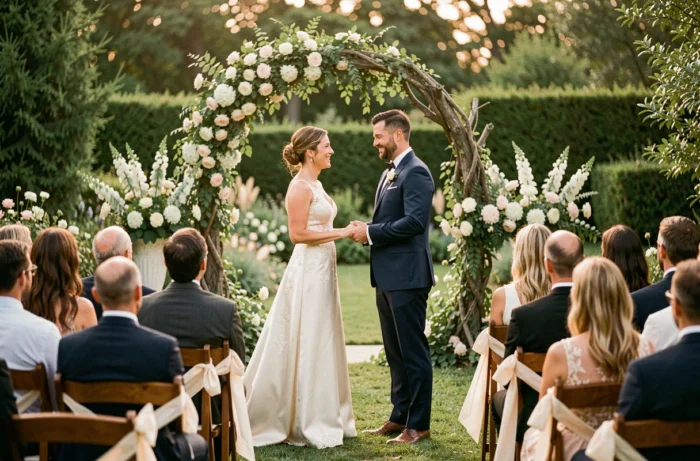
The most common point of confusion is the difference between the length of a ceremony and the length of the day. A civil ceremony at the town hall rarely takes more than thirty minutes for the exchange of vows, but the actual time slot—including waiting, getting settled, and congratulations afterward—usually comes closer to an hour.
A Catholic religious ceremony generally lasts between forty-five minutes and an hour and a half. A non-religious ceremony, with its more flexible format, typically lasts around forty-five minutes, sometimes longer if several friends and family members are giving speeches.
Couples combining a civil ceremony with a religious or non-religious ceremony should allow time to travel between the two venues. This often-underestimated journey can easily add thirty to forty-five minutes to the schedule, especially when traveling in a convoy of cars. Sources detailing the average length of a wedding ceremony confirm that travel time between venues is the main cause of scheduling delays.
How a single venue or multiple locations affect the overall schedule
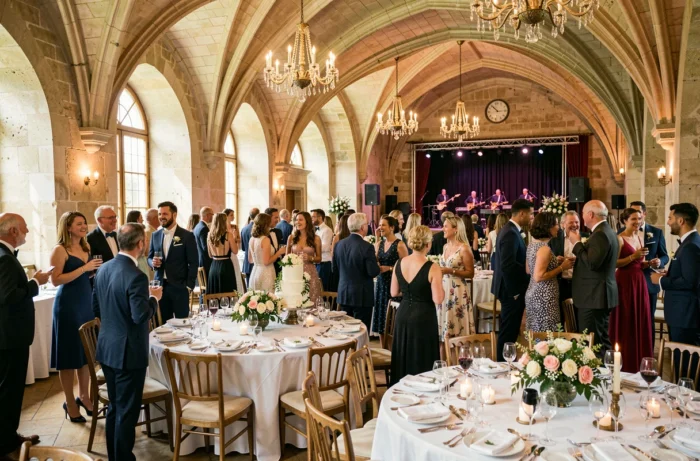
Holding a wedding at a single venue (an estate with a ceremony space, cocktail area, and reception room) shortens the day by one to two hours compared with a multi-venue format. With no travel between the ceremony and reception, there’s less downtime and less risk of guests getting separated.
A single venue makes scheduling easier, but it doesn’t shorten each part of the day. The cocktail reception will take just as long, as will the meal. What changes is how smoothly guests move from one part of the day to the next: they can go from one space to another without getting back in their cars.
By contrast, a wedding split between the town hall, a place of worship, and a reception venue involves at least two journeys. Each requires a buffer, and delays can add up. With a tight schedule, a journey that takes fifteen minutes longer pushes back the cocktail reception, which delays the meal and, in turn, the first dance.
Build in buffer time
A GPS gives you an estimated journey time under normal conditions. On the wedding day, the convoy travels more slowly, guests get lost, and some take a detour. Adding a third to the estimated travel time helps avoid an unrealistic schedule.
Cocktail reception, meal, and evening party: where the time really goes
Preparations and ceremonies take up the morning and early afternoon. The rest of the day, from the cocktail reception to the end of the evening, is the longest and least predictable stretch.
Cocktail reception and photos
The cocktail reception typically lasts two to two and a half hours. This time also includes group photos and couple portraits, which can easily take twenty to thirty minutes each. Group photos in particular can be time-consuming: gathering the right people, waiting for latecomers, and retaking shots.
- Group photos: Prepare a detailed list of group combinations (immediate family, friends, colleagues) to keep gathering time to around ten minutes per group.
- Couple portraits: Taking them during the cocktail reception makes the most of the natural light without creating a gap in the schedule, but it means stepping away for at least twenty minutes.
- Spontaneous congratulations: Often overlooked in the schedule, these naturally happen during the cocktail reception and add time to each transition.
Meal and entertainment
The wedding meal is the biggest time commitment. Allow three to four hours from guests taking their seats to dessert. This includes speeches, entertainment between courses, and any games organized by the wedding party.
A traditional seated meal with four or five courses will take longer than a buffet. Depending on how many there are, speeches can add up to between twenty and forty-five minutes. Couples who want the meal to run smoothly should limit speeches to three or four and spread them between courses rather than scheduling them all at the start of the evening.
End-of-evening restrictions and venue closing time
The first dance usually takes place toward the end of the meal, often between eleven p.m. and midnight. The dancing continues afterward, depending on the terms set by the reception venue.
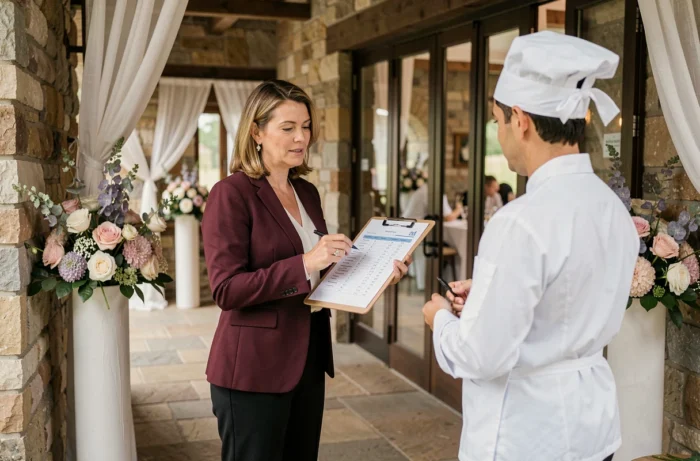
The end time for the evening depends on the contract signed with the venue. Some estates require the music to stop at two a.m., while others allow the party to continue until four or five. This directly affects the total length of the day and the pace of the meal: if the venue closes early, the entire schedule needs to move up.
- Check the cutoff time for amplified music when booking the venue, not just a few weeks before the wedding.
- Ask whether an extension is possible and how much it costs, as some venues charge an hourly fee.
- Take local noise regulations into account, as they may restrict sound levels after a certain time regardless of the venue contract.
The day’s schedule should therefore be planned backward: start with the venue’s required end time, then work back to the ceremony and preparation times. A wedding that must end at two a.m. and has preparations starting at eight a.m. spans eighteen hours. Cutting two hours from this window can sometimes transform the pace of the day by eliminating a journey or shortening the cocktail reception.
You don’t decide how long a wedding lasts; you find out afterward. What you can decide is how the schedule is structured and how much time to leave between each part of the day. A realistic schedule that accounts for the venue’s restrictions and travel distances is the only reliable way to keep the day running smoothly and avoid feeling rushed.