The Swiss educational system is based on a cantonal organization: each canton finances, structures, and administers its own schools. For parents, this decentralization means that the available resources, support programs, and contacts vary depending on the place of residence. Supporting a child’s education in this context requires understanding local mechanisms and identifying the networks that coordinate educational actors.
Cantonal competencies and disparities in educational support
In Switzerland, education is not managed by a central ministry. The 26 cantons define their own rules, calendars, and budgets. Avenir Suisse highlights significant disparities in spending per student between cantons, without these disparities being sufficient to explain differences in academic results.
This reality has a direct consequence for families: the available support depends on the canton of residence. A child attending school in Geneva will not benefit from the same provisions as a student from Neuchâtel or Valais. Parents who move from one canton to another sometimes discover a very different system, including for access to specialized support measures.
Due to the lack of regular standardized data at the national level, it remains difficult to compare the effectiveness of cantonal choices. Switzerland is working towards more regular monitoring of academic competencies between cantons, which could eventually provide better visibility of educational pathways. For now, parents seeking information on Réseau Éducation Suisse find a structured entry point that centralizes resources by canton and need.
Role of parents in the Swiss educational network
Supporting education goes beyond checking homework. In the Swiss system, parents are considered full educational partners, in connection with teachers, social workers, and specialized services.
Dialogue with the school and professionals
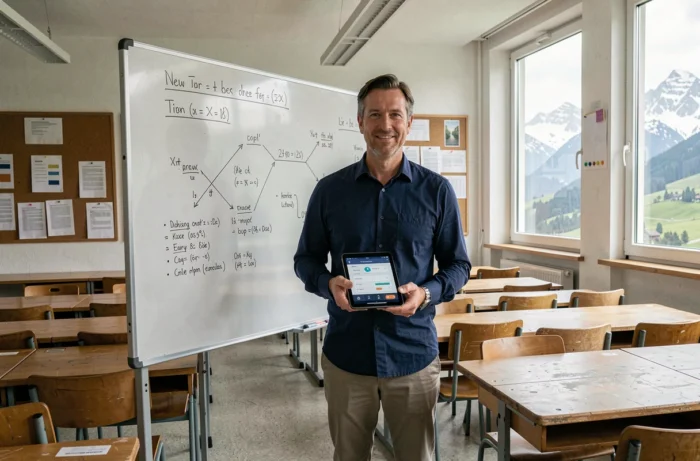
Network meetings, practiced in several cantons, bring together the teacher, parents, and relevant professionals (speech therapist, school psychologist, social worker) around the same table. These meetings allow for the coordination of interventions around the child rather than leaving each actor to act in isolation.
This networked approach is based on a principle documented by éducation21: linking the different educational islands of the child (school, sports activities, associations, family) to create a coherent educational landscape. Regular exchanges between a classroom teacher and a sports coach, or between a language course leader for parents and an integration delegate, illustrate this logic.
What parents can observe on a daily basis
- The child’s attitude towards learning: motivation, fatigue, avoidance of certain subjects, which may signal a need for targeted support
- The quality of communication with the school: frequency of exchanges, accessibility of teachers, existence of formal channels (notebooks, digital platforms)
- The consistency between different living environments: does the child receive contradictory messages between home, school, and extracurricular activities
These observations, shared during network meetings, contribute to a more reliable shared diagnosis than a one-time assessment.
Continuity of support for children with special educational needs
The issue of continuity is a major challenge for families of children requiring specialized support. A Swiss study on the pathways of 50 children highlights the possible disruptions during school transitions, particularly between kindergarten and primary school, or between primary and secondary education.
The identified difficulties are not solely pedagogical. They also relate to the complexity of administrative procedures, the multiplicity of contacts, and the risk of loss of information between services. When a child moves from one level to another, the follow-up file does not always transfer smoothly.
Two elements emerge as crucial for limiting these disruptions:
- The trust relationship between families and professionals, built over time and not just during crisis situations
- Effective coordination between services (regular education, special education, medical-pedagogical services), which requires clear transmission protocols
- Anticipation of transitions, involving parents in preparation meetings several months before the change of level
Governance of educational data: an ongoing Swiss project
One aspect rarely addressed in parental guides concerns the management of educational data at the federal level. In June 2025, the plenary assembly of the CDIP (Conference of Cantonal Directors of Public Education) published a report on the policy of data use in education.
This project aims for a coherent implementation of data policy across cantons. For parents, the issue is concrete: how is information about a student’s journey transmitted, stored, and shared between institutions, especially during an inter-cantonal move?
Digital citizenship is also making its way into the programs. Some schools now incorporate modules on managing personal data and the responsible use of digital tools, extending to school the questions parents address at home.
The Réseau Éducation Suisse sits at the intersection of these issues. It provides parents with a framework to understand not only the available educational pathways but also the institutional changes that transform educational monitoring. Supporting a child’s education in Switzerland requires navigating very different cantonal realities, and it is precisely this navigation that structured educational networks seek to facilitate.